Home > Steel Products > Steel Plates > MS Plates

MS Plates

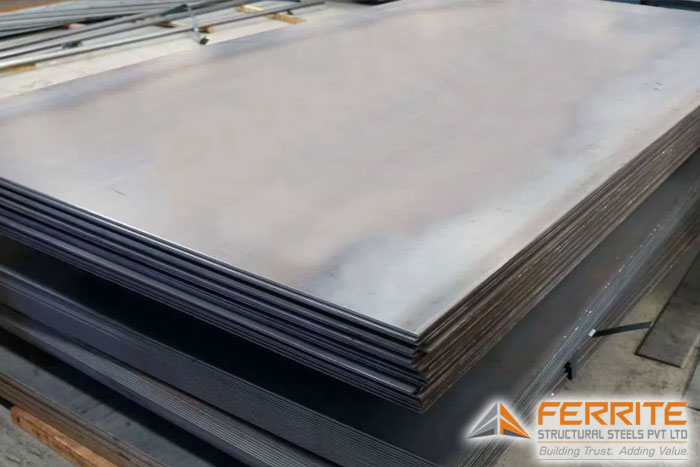
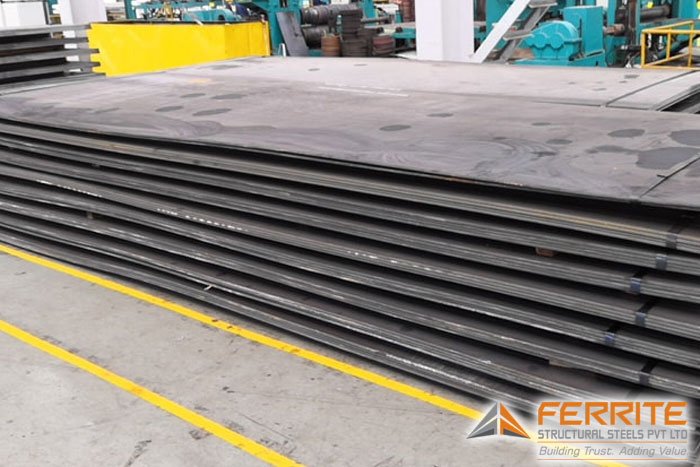
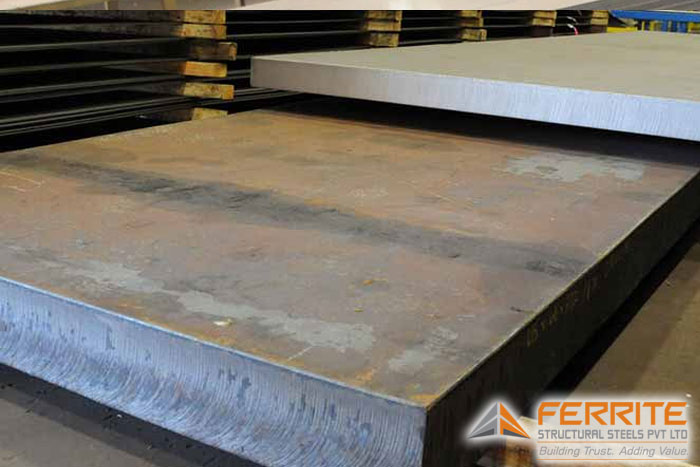
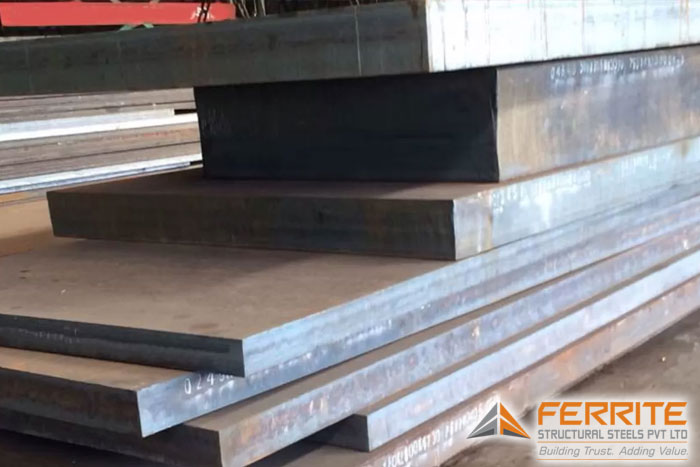
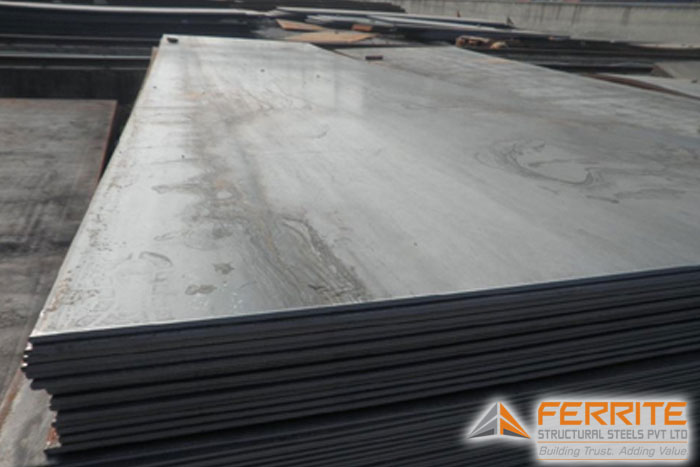
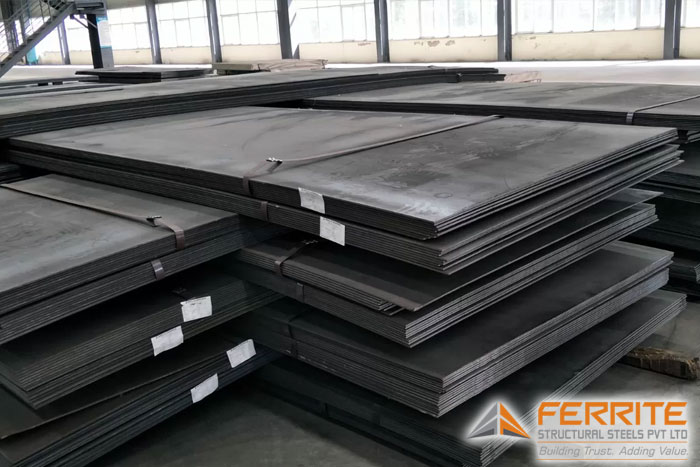
Buy Premium Quality MS Plates at Ferrite Structural Steels Pvt Ltd. – India’s Leading Manufacturer, Supplier, Exporter and Distributor of Steel Bars.

Mild steel is a type of steel that has a low-carbon alloy, derived from carbon steel. It is made by combining a low amount of chromium and molybdenum with low carbon. Because of the low carbon content, mild steel is more weldable and ductile than carbon steel. Mild steel is magnetic and contains a high amount of ferrite and iron. It has various desirable characteristics, such as affordability, ease of welding, and machinability. MS plate is particularly useful in corrosive environments, as they offer excellent corrosion resistance properties. They provide high resistance to nitric and chloride corrosion in sulfide solutions. Mild steel can be easily worked at high temperatures and shows excellent resistance to chloride crossing and cracking stress.

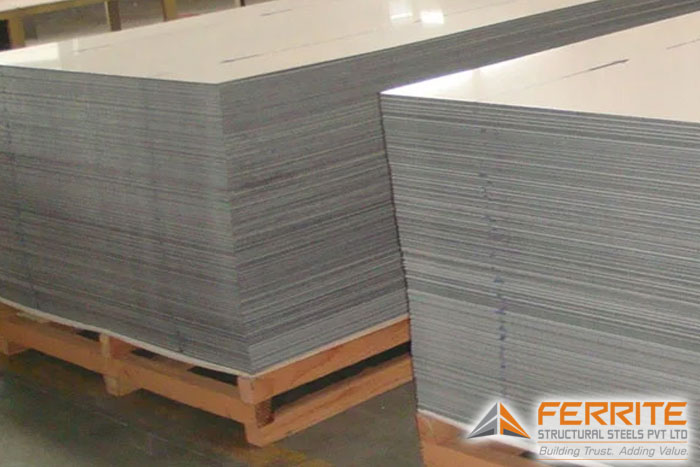
Ferrite Structural Steels Pvt. Ltd. is a highly reputable manufacturer, supplier, and stockist of superior quality Mild Steel Plates, HR plates, CR Plates, High Strength Low Alloy plates, Galvanized Plates, Colour Coated Plates & Mild Steel Perforated plates in Mumbai, India. We are a well-known MS plate supplier in Mumbai, catering to customers worldwide. Our products are manufactured in compliance with all relevant standards and specifications, including various types of mild steel plates. Furthermore, we tailor our production to meet our customers’ specific requirements. Before delivering the mild steel plates, we conduct various tests, such as mechanical tests, chemical tests, toughness tests, eddy current tests, impact tests, micro tests, flaring tests, and flattening tests.

Different Types of MS Plates

IS 2062 E250 BR

IS 2062 E250 BR is a standard grade of mild steel specified by the Indian Standard Institute for hot rolled medium and high tensile structural steel. It offers a minimum yield strength of 250 MPa and is used in general structural applications such as bridges and buildings due to its excellent weldability and machinability.

ASTM A36 Plate

ASTM A36 is a standard specification for carbon structural steel. It offers a minimum yield strength of 36,000 psi (250 MPa) and is known for its ductility and weldability. A36 plates are commonly used in construction, fabrication, and repair projects, including building frames and bridges.

IS 2062 E250A

IS 2062 E250A is another grade under the IS 2062 standard for hot rolled medium and high tensile structural steel. It also has a minimum yield strength of 250 MPa, but it is specifically designed for applications where better formability and weldability are required.

IS 2062 E250BO

IS 2062 E250BO is a grade within the IS 2062 standard featuring a minimum yield strength of 250 MPa. Known for its good welding properties, it is often used in structures that require excellent machinability and strength.

IS 2062 E350 C/BR/BO

IS 2062 E350 grades (C, BR, BO) are higher strength variants of the IS 2062 standard, with a minimum yield strength of 350 MPa. These plates are used in applications requiring higher strength and durability, such as heavy machinery, industrial structures, and high-stress environments.

S235JR Plate

S235JR is a non-alloy structural steel grade specified in EN 10025-2. It has a minimum yield strength of 235 N/mm² and is widely used in construction and engineering applications due to its good weldability and impact resistance.

EN 10025 S235JR

EN 10025 S235JR is similar to S235JR, providing the same minimum yield strength of 235 N/mm². This grade is used in structural applications where strength and toughness are crucial, such as in construction and heavy machinery.

S275JR Plate

S275JR is a non-alloy structural steel grade specified in EN 10025-2. It has a minimum yield strength of 275 N/mm² and is used in general construction applications, such as bridges and buildings, due to its excellent weldability and good impact resistance.

EN 10025 S275JR

EN 10025 S275JR is similar to S275JR, providing the same minimum yield strength of 275 N/mm². This grade is used in construction and engineering applications that require higher strength and durability.

IS 2062 E450 C/BR/BO

IS 2062 E450 grades (C, BR, BO) are high-strength structural steel plates with a minimum yield strength of 450 MPa. They are used in applications requiring high strength and toughness, such as in heavy machinery, industrial structures, and high-stress environments.

EN8 Plates

EN8 is an unalloyed medium carbon steel with good tensile strength. It is used for applications where better properties than mild steel are required but where the cost of an alloy steel is not justified. EN8 plates are typically used in the manufacture of shafts, studs, bolts, connecting rods, screws, rollers, and more.

C45 Plate

C45 is a medium carbon steel grade offering good machinability and high strength. It is typically used in manufacturing parts that require higher strength and hardness, such as gears, bolts, axles, and machinery parts.

Key Features and Benefits

  1. High Strength: MS plates possess considerable tensile strength, making them suitable for heavy-duty applications.
  2. Excellent Weldability: They are easy to weld, facilitating the creation of complex structures and components.
  3. Good Formability: MS plates can be easily formed and shaped, allowing for a wide range of fabrication processes.
  4. Machinability: They offer excellent machinability, making them ideal for precision engineering and manufacturing applications.
  5. Cost-Effective: MS plates provide a cost-effective solution for many structural and industrial applications.
  6. Durability: MS plates are known for their robustness and long lifespan, reducing the need for frequent replacements and maintenance.
  7. Affordability: Despite their strength and versatility, MS plates are often more affordable compared to other materials, offering cost savings.
  8. Wide Availability: They are readily available in the market, ensuring easy procurement and consistency in supply.
  9. Recyclability: MS plates are highly recyclable, contributing to environmental sustainability and reducing the carbon footprint of projects.
  10. Structural Integrity: The high strength and stability of MS plates provide excellent structural integrity for buildings, bridges, and other infrastructure.


MS Plates Specification

Product Name MS Plates
Brand Ferrite Structural Steels Pvt. Ltd.
Thickness (mm) 3, 4, 5, 6, 8, 10, 12, 16, 20, 22, 25, 28, 32, 36, 40, 45, 50, 55, 60, 65, 70, 75, 80, 90, 100
Width (mm) 1200, 1500, 1800, 2400
Length (mm) Available upon request
Finish Hot-rolled, galvanized, or as specified by customer
Make/Brand SAIL, RINL, Jindal, Tata, Pushpak, Mamaya, Mahavir, SKS, Balbir

Sizes and Weight

Plate thickness (mm) Weight (kg/m) kg/meter (width 1200mm) kg/meter (width 1500mm) kg/meter (width 1800mm) kg/meter (width 2400mm)
3 23.55 28.3 35.3 42.4 56.5
4 31.4 37.7 47.1 56.5 75.4
5 39.25 47.1 58.9 70.7 94.2
6 47.1 56.5 70.7 84.8 113
8 62.8 75.4 94.2 113 150.7
10 78.5 94 118 141 188
12 94.2 113 141 170 226
16 125.6 151 188 226 301
20 157 188 236 283 377
22 172.7 207 259 311 415
25 196.25 236 294 353 471
28 219.8 264 330 396 528
32 251.2 301 377 452 603
36 282.6 339 424 509 678
40 314 377 471 565 754
45 353.25 424 530 636 848
50 392.5 471 589 707 942
55 431.75 518 648 777 1036
60 471 565 707 848 1130
65 510 612 765 918 1224
70 549.5 659 824 989 1319
75 588.75 707 883 1060 1413
80 628 754 942 1130 1507
90 706.5 848 1060 1272 1696
100 785 942 1178 1413 1884


Applications of MS Plates

Mild Steel Plates find applications in a wide range of industries and sectors due to their excellent properties. Here are some of the common industries where MS Plates are widely used:

  1. Shipbuilding: MS Plates are used extensively in shipbuilding as they can withstand harsh marine environments and provide high strength and durability to the structures.
  2. Automobiles: Mild Steel Plates find various applications in the automobile industry, such as the manufacturing of chassis, body panels, and structural components, due to their excellent strength-to-weight ratio and formability.
  3. Home appliances: MS Plates are used in the production of various home appliances such as refrigerators, washing machines, and air conditioners due to their superior properties like high strength and durability.
  4. Construction materials: Mild Steel Plates are widely used in construction materials such as bridges, buildings, and other structures, as they provide excellent strength and resistance to wear and tear.
  5. Housing materials: These plates are used in the construction of housing materials such as roofing plates, walls, and floors due to their excellent strength and durability.
  6. Heat exchangers: Mild Steel Plates are used to manufacture heat exchangers due to their excellent thermal conductivity and high strength.
  7. Beverage cans: MS Plates are used in the production of beverage cans due to their superior properties like high formability, corrosion resistance, and light-weight.
  8. Conveyors: MS Plates are used in the manufacturing of conveyors for various industries like food processing, mining, and material handling, due to their strength and durability.
  9. Architectural: MS Plates are used in the architectural industry for building facades, cladding, and other decorative applications due to their excellent formability and aesthetic appeal.
  10. Marine: Mild Steel Plates find various applications in the marine industry for building offshore structures, oil rigs, and other marine equipment due to their high strength, toughness, and corrosion resistance.
FAQs — MS Plates

MS Plates: Frequently Asked Questions

Straight answers on sizes, thickness, weight, grades, MTC, pricing and ordering — so your enquiry is specification-ready before you send it.

01
What products are covered on the MS Plates category page?
The category covers mild-steel and structural-grade plates. It helps buyers compare product forms before moving to a grade or specification enquiry. Each purchase request should still state the exact product, grade, standard, dimensions, finish, quantity and documentation; the category name alone is not a complete order description.
02
How should a buyer choose between the main MS Plates types?
Choose by grade, strength class, toughness and weldability. The approved drawing, BOQ, service conditions and fabrication method should control the decision. Products grouped on one category page may have different standards and performance, so do not select only by appearance, availability or headline price.
03
What is the difference between MS Plates and sheet products?
Plate is generally ordered in heavier thicknesses, while sheet is commonly thinner and may use different dimensional, surface and tolerance conventions. The commercial boundary varies by standard. State the required product form and governing standard rather than converting “plate” to “sheet” without end-user approval.
04
Which thickness, width and length details are needed for MS Plates?
Provide nominal thickness, width, length, piece quantity, total tonnage, tolerance and cutting allowance. Availability should be confirmed for the requested grade and dimensions. For cut parts, distinguish mother-plate size from finished size and state whether rolling direction matters.
05
How is the weight per square metre of MS Plates calculated?
Weight per square metre is estimated from thickness multiplied by the applicable material density, with units converted consistently. Chequered pattern, alloy density and dimensional tolerance can affect the result. Confirm whether quotation, freight and invoicing use theoretical finished weight, gross input weight or actual dispatch weight.
06
Which plate standard should be specified for MS Plates?
State IS 2062, ASTM A36, EN structural grades and specified engineering grades, including edition, grade, delivery condition and supplementary requirements. Material grade, dimensional tolerance and testing are separate requirements. The purchase order and MTC should use the same designation, and code-controlled work requires the approved project specification.
07
What edge and surface condition should be stated for MS Plates?
State mill edge or cut edge, surface condition, scale-removal requirement, finish, protective coating or film, and appearance criteria where relevant. Surface terminology varies by product. If welding, painting, lining or hygienic service is planned, include the preparation and acceptance requirement at enquiry stage.
08
Which applications commonly use MS Plates?
Common enquiry contexts include general fabrication, base plates, machinery and construction. These examples do not establish load capacity, corrosion life, wear life or code compliance. Final selection must follow the approved drawing, design calculations, service environment and responsible engineer or end-user approval.
09
Can MS Plates be cut, drilled, welded or fabricated?
Processing can be reviewed against the controlled drawing, material grade, dimensions, tolerances and quantity. Show holes, bevels, bends, welds, finished lengths and inspection points. Critical work must follow the approved code, qualified procedures and responsible engineer’s approval.
10
What should be checked on the MTC for MS Plates?
Check the product description, grade, governing standard, heat number, chemistry, mechanical results and delivery condition. Request the required EN 10204 document type or project format at enquiry stage. The MTC must match the offered material; a similar grade description is not proof of equivalence.
11
What is the current MS Plates price per kg?
A fixed current price per kg should not be published because values change with grade, size, quantity, source, testing, finish, processing and freight. Request a dated quotation with the complete specification and delivery postcode. Confirm validity, GST, cutting, packing and transport inclusions.
12
How is the MS Plates price per tonne determined?
Price per tonne reflects grade, standard, dimensions, quantity, source or make preference, MTC, inspection, processing, packing and logistics. Provide piece count and total tonnage. Confirm whether billing uses theoretical or actual weight and whether offcut or input-material utilisation is chargeable.
13
What is the MOQ for MS Plates?
MOQ should be confirmed for the exact product, grade, size, length, finish and quantity. Less common combinations or processing may have a different commercial minimum. Provide piece quantity and total tonnage at enquiry stage rather than assuming one MOQ applies to the entire category.
14
Can stock availability of MS Plates be confirmed before ordering?
Yes. Availability should be confirmed against the exact product type, grade, standard, dimensions, finish, make preference and quantity. Do not assume every item shown on a category page is ready stock. Ask for confirmation of material, heat traceability, documentation and processing status.
15
Can third-party inspection be requested for MS Plates?
Third-party inspection can be reviewed when the agency, inspection and test plan, witness or hold points, acceptance criteria and document format are stated before quotation. Scope, access, charges and schedule must be agreed in the purchase order; inspection is not automatically included in the base price.
16
How should buyers compare quotations from MS Plates suppliers?
Compare the same product, grade, standard edition, dimensions, tolerance, finish, make, quantity, MTC, inspection, processing, packing and freight basis. Check GST and quote validity. A lower quotation may reflect a different grade, weight basis, documentation scope or delivery condition.
17
Does Ferrite supply MS Plates in Mumbai and Navi Mumbai?
Ferrite Structural Steels Pvt Ltd has sales operations in Mumbai and a location in Kalamboli, Navi Mumbai. Buyers should provide the delivery postcode, unloading constraints, quantity and required date. Availability, freight and dispatch arrangements must be confirmed for the specified order.
18
Can buyers in Maharashtra and nearby states request MS Plates quotations?
Requirements from Maharashtra and nearby states can be reviewed against the exact specification, quantity and destination. Provide the delivery postcode, access or unloading restrictions and required date. Commercial terms, freight and availability should be confirmed before issuing a purchase order.
19
Can India-wide and export buyers source MS Plates?
India-wide and export requirements can be reviewed based on specification, quantity and destination. Export buyers should state destination port, Incoterm, packing, documentation, inspection scope and shipment quantity. Availability and commercial terms must be confirmed at enquiry stage.
20
What information is needed for a fast MS Plates quotation?
Provide product type, profile or size, thickness, grade, standard, length, piece quantity, total tonnage, finish or coating, make preference, MTC and inspection needs, fabrication drawing, delivery postcode or destination port, Incoterm and required delivery date. Complete enquiries reduce technical and commercial clarification.

Why Choose Ferrite Steels?

Choosing Ferrite Structural Steels Pvt Ltd. for your MS plates ensures you receive top-quality products backed by our commitment to excellence. Our MS plates are manufactured from premium materials, providing exceptional strength, durability, and reliability for various applications. We offer a wide range of thicknesses, widths, and lengths to meet diverse project requirements, all while maintaining competitive pricing. With finishes like hot-rolled and galvanized, our MS plates are designed to withstand the toughest conditions. Trust Ferrite for consistent quality, exceptional service, and on-time delivery. Experience the Ferrite difference today—request a quote and let us help you with your project needs.

Send Enquiry